More Than a Fix: A Full Restoration
February 15, 2025 — 60 Pounds Down, a Surgery Behind Me, AND a New Chapter Ahead
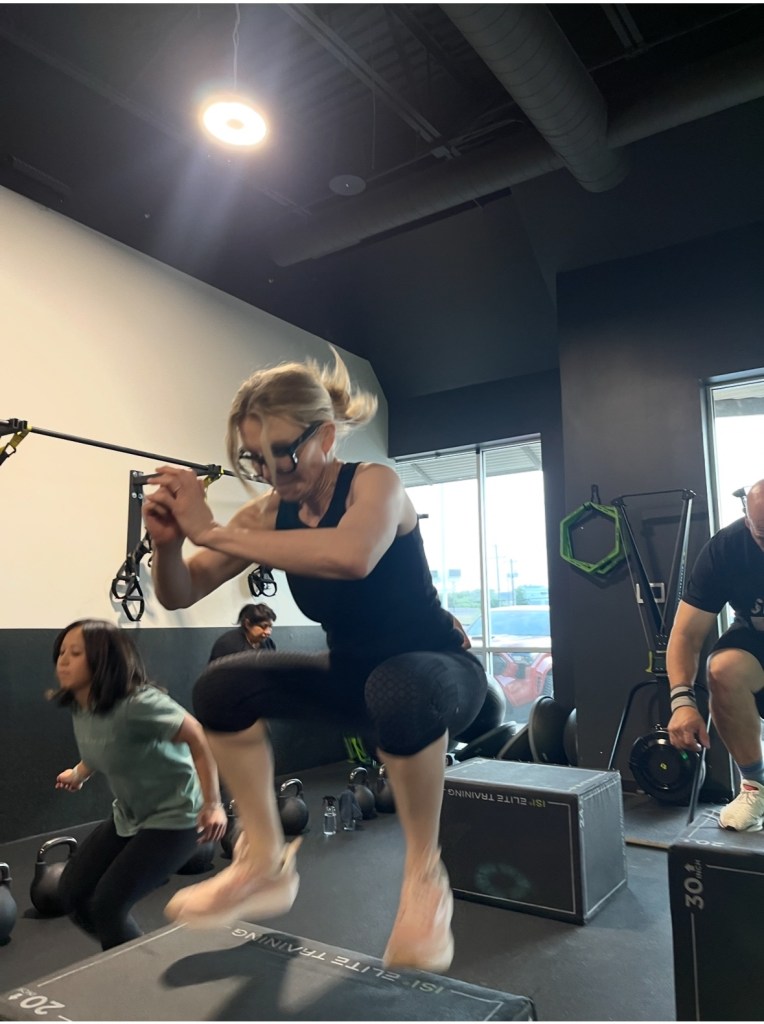
In February of 2025, I hit a major milestone — 60 pounds down, exactly — after five years of hard work. But the journey wasn’t just about finding the right workout or sticking to a meal plan. It took time, trial, and a lot of frustration to figure out what my body actually needed. I went through multiple fitness programs, gyms, doctors, and kept showing up — even when things felt stuck. What I didn’t realize was that part of the struggle wasn’t just about fitness.
I was also battling persistent stomach issues that no routine could fix. It took several tests and specialists to finally get to the root of it — and that changed everything. I thought I was crossing the finish line when I hit my goal and lost my final pound in February. But my body was still telling me something wasn’t right in early 2025.
AND this isn’t just about weight. This journey has tested my health, my mindset, and my ability to keep going when nothing made sense.
I was dealing with symptoms that didn’t add up. No one could give me clear answers, but my body was screaming for help.
I want to share what I’ve learned because someone out there might be going through the same thing and not even realize what’s going on.
Here’s what I was experiencing:
Constant bloating that made me look pregnant after a meal, no matter what I ate. Persistent stomach pain and pressure, especially after meals or working out. A core that felt weak or unstable, no matter how much I trained. Episodes of nausea, indigestion, and even constipation that couldn’t be traced to food alone. An odd, domed shape down the middle of my abdomen when I sat up or strained.
And emotionally? Every time I looked in the mirror, I saw the loose skin and felt stuck between who I was and who I was trying to become.
Eventually, after pushing for more answers, I was diagnosed with a hidden (occult is the medical term) hernia and diastasis recti — a separation in the abdominal muscles that often goes unnoticed but causes serious discomfort, instability, and affects everything from core strength to digestion. It was difficult to find the hernia because it was hidden and that’s why it’s important to push for answers.
Here’s where things took a turn — and where I truly believe things aligned for a reason.
A coworker casually mentioned a plastic surgeon’s name while talking about a totally unrelated procedure she was preparing for. It just so happened to be a name I recognized — he had taken care of a few of my friends in the past.
If I hadn’t heard it, when I got diagnosed with my condition earlier this month, I would’ve gone to a general surgeon and had a standard ventral hernia repair with abdominal muscle repair (which is covered by insurance when it’s part of a hernia correction), and that would’ve been the end of it.
When my coworker mentioned the plastic surgeon’s name, something clicked after I got diagnosed — I realized I should see him instead of a general surgeon so I could address the entire problem, not just patch the medical part.
I ended up going to a plastic surgeon because I wanted the full picture addressed. And I learned something important:
🛑 Insurance doesn’t cover the removal of excess skin — even when it causes real, physical problems.
And that’s unfortunate. Because that skin wasn’t just cosmetic. It was hard to hide under clothes and worst of all — a daily reminder of the unhealthy choices that got me there in the first place.
So I made the decision to pay for that part myself.
In one surgery, I was able to have:
✔️ Hidden hernia repaired
✔️ Abdominal muscle repair
✔️ Belly button repositioned
✔️ Excess skin removed
Same recovery time as a general procedure at a cost to me. But the outcome? Life-changing.
Now I’m healing. I’m resting. I’m eating clean. I’ll return to working out when my body’s ready — because healthy eating and exercise aren’t just part of my life — they are my life and have been for the last 5 years in stages.
The last five years haven’t just been about losing weight — they’ve been about reclaiming my health, step by step. Every challenge, every test, every restart brought me closer to the root of what my body truly needed. This is a lifestyle built on healing, discipline, and faith — for life, not just for a season.
Looking back, that pain was a blessing in disguise. It led me to answers. It led me to the right surgeon. And it finally let me leave behind the past — both emotionally and physically.
If any of this sounds familiar to you, listen to your body. Push for answers. And know that healing is possible — even if it takes time to get there.
If you’re dealing with a hernia (mine was a ventral hernia) and abdominal muscle separation — especially after major weight loss or pregnancy — I don’t recommend going straight to a general surgeon.
Note: This is just my personal experience, not medical advice.
A general surgeon will address the medical issue, but they won’t focus on the full picture.
Plastic surgeons are trained to repair the function and the appearance of your core, while repairing your muscle and removing the hernia as well.
And that matters. Because this surgery isn’t just about fixing a medical problem that cannot stay unaddressed — it’s about making sure your body reflects the one you’re building, not the one you’re leaving behind.
You’ve worked hard to change your life. You deserve a result that honors that effort — not one that keeps you stuck in a body that doesn’t tell your real story.
And honestly — if you’re going to have the surgery anyway, you might as well do it right. Choosing a plastic surgeon doesn’t add more healing time, but it can completely change how you feel about your body afterward.
You’re not just fixing what’s broken — you’re reclaiming the body you’ve worked for. To every woman out there who’s carried weight, stress, babies, trauma — and still shows up and fights for her health — you deserve to feel strong, whole, and proud in your skin. Don’t just settle for repaired. Go for restored.
The reason I choose to share all of this is simple — because the Bible says to.
In Revelation 12:11, it says, “They overcame him by the blood of the Lamb and by the word of their testimony.” I believe our stories are meant to be told, especially when they can help someone else find healing, hope, or clarity.
If you’re a woman struggling with your health, your body, or just feeling lost in the process — I want to encourage you to surrender it all to God. Let Him guide you to the root of what’s really going on, physically and spiritually. The answers are there. Sometimes it takes faith, patience, and persistence to uncover them — but God doesn’t waste your pain, and He never misses the details.
Below is more detail about the two medical diagnosis I received.
✅ Mine was a small ventral hernia — hidden behind a weak spot in my abdominal wall, making it what’s considered an occult (or hidden) hernia.
This WAS the culprit for stomach pain, nausea, and constipation.
Why?
A hidden hernia involves tissue (like intestines or fat) pushing through a weak spot in the abdominal wall. Even if it’s small or not visibly bulging, it can: Compress or restrict the intestines, leading to pain, bloating, nausea, and constipation. Cause intermittent obstruction of the bowel or trap nerves in the abdominal wall, resulting in chronic or sharp pain. Worsen with physical activity, straining, or heavy meals.
✅ Diastasis Recti (Muscle Separation):
This can contribute to digestive issues, but more indirectly.
Why?
It weakens the abdominal wall and core stability, which can: Slow digestion and reduce internal support, causing bloating or poor gut motility. Make you feel full quickly or chronically uncomfortable. Create that “disconnected” or “unsupported” feeling in the stomach area. It doesn’t usually cause nausea or constipation on its own, but it can amplify symptoms if other issues (like a hernia) are present, like in my case.
⚠️ Why it’s often hidden:
With diastasis recti, the abdominal wall is stretched, so pressure is distributed, and the hernia may not form a noticeable lump. Symptoms may show up instead — like bloating, pain, nausea, or core weakness — making it easy to miss without imaging.
“The Lord will guide you always; He will satisfy your needs… You will be like a well-watered garden, like a spring whose waters never fail.” — Isaiah 58:11 (NIV)
This journey has stretched me — physically, emotionally, and spiritually. But through every setback, every unanswered symptom, every moment of confusion, God was guiding me. He didn’t just lead me to healing — He led me to understanding.
And now, I share my story in obedience. Because I believe God uses our struggles to point others to hope.
If you’re walking through your own storm, surrender it to Him. He knows the root. He holds the answers. And when you let Him lead, He won’t just patch you up — He’ll restore you completely.
Also, check out the full list of my recommended essentials—trust me, there are things on there you probably haven’t thought of! And if you’ve got tips of your own, I’d love for you to drop them in the blog comments for the benefit of the community of women going through this procedure!
 Elevating Health, Inspiring Balance