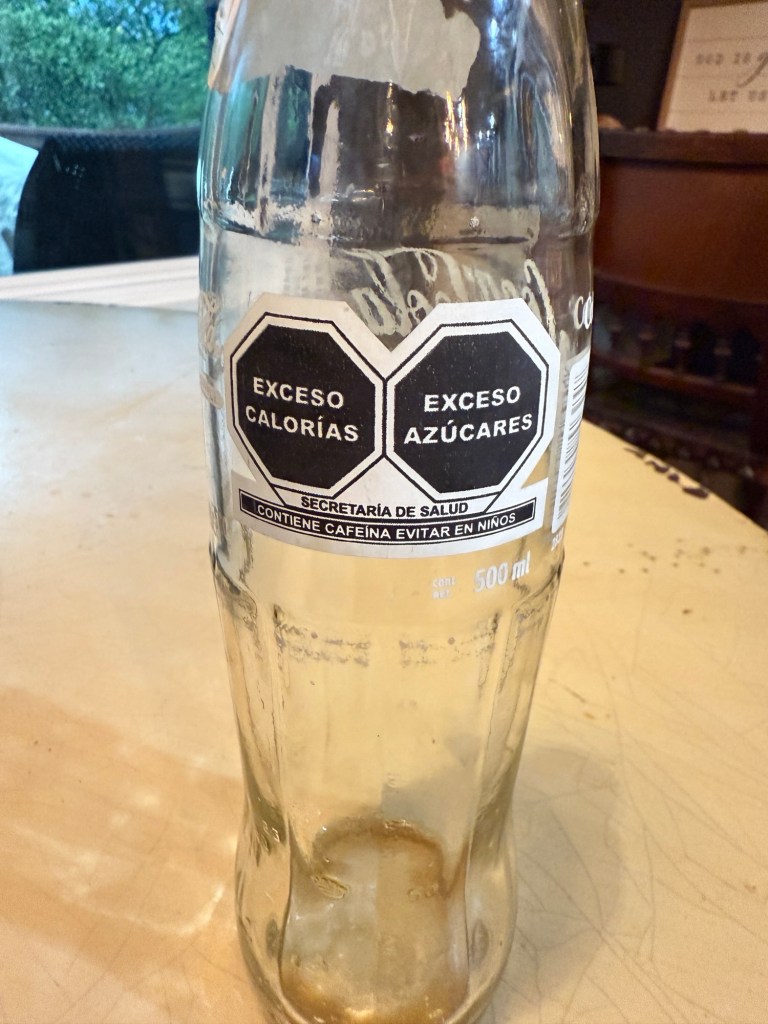
I recently came across a Coca-Cola bottle from Mexico, and what I noticed on the label was incredibly impressive. Mexico has adopted a clear and bold warning system on food and beverage packaging to help consumers make better health decisions—and honestly, it’s something the United States could truly benefit from.
Right on the front of the bottle were two black octagonal labels:
Exceso Calorías (Excess Calories) Exceso Azúcares (Excess Sugars)
There’s no fine print or hidden disclosures—just straightforward warnings that are hard to miss. Even the bottle cap had a printed notice stating “2 Sellos” (2 Seals) along with “Contiene cafeína. Evitar en niños” (Contains caffeine. Avoid in children).
These labels are part of Mexico’s national regulation known as NOM-051, which was implemented to combat the country’s rising obesity and diabetes rates. Products that exceed set thresholds for sugar, saturated fat, sodium, calories, or caffeine must carry these visible warnings. It’s not just about awareness. It’s about transparency and public health.
As someone who cares about wellness, health, and informed decision-making, I find this system inspiring. In the U.S., we rely heavily on nutrition facts panels and ingredient lists, which are often overlooked or misunderstood. Mexico’s system makes it simple: if it’s excessive in something harmful, the label tells you clearly and directly.
Imagine if more countries, especially the U.S., adopted this approach. We could shift the way people view processed foods, encourage healthier choices, and potentially reduce long-term health issues caused by poor nutrition.
This is more than a label, it’s leadership in public health. Let’s hope we follow their example.

 Elevating Health, Inspiring Balance